Bay laurel
1 / 6
Bay Laurel
Laurus nobilis
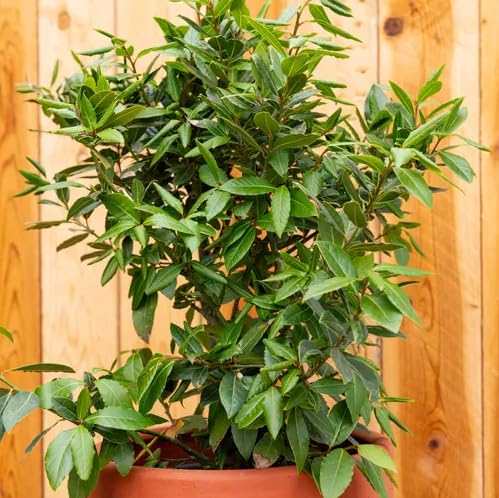
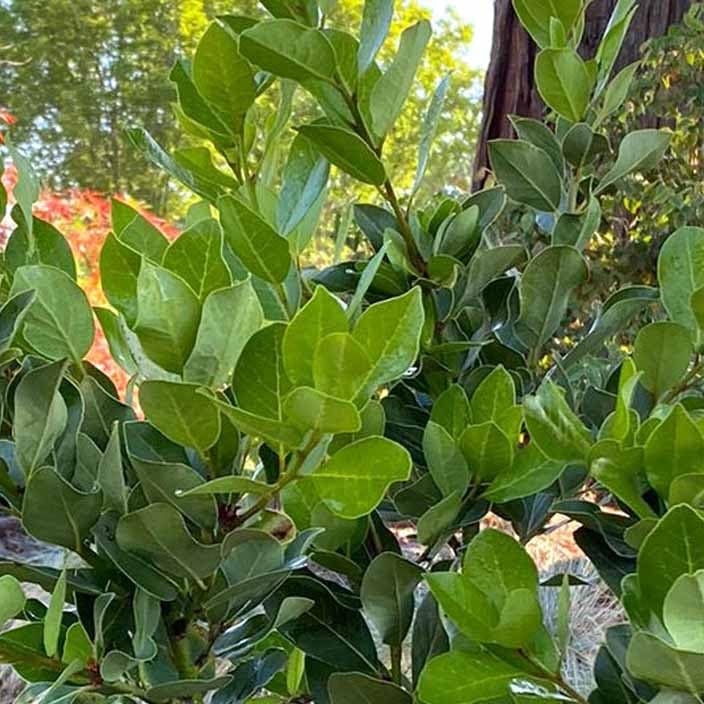
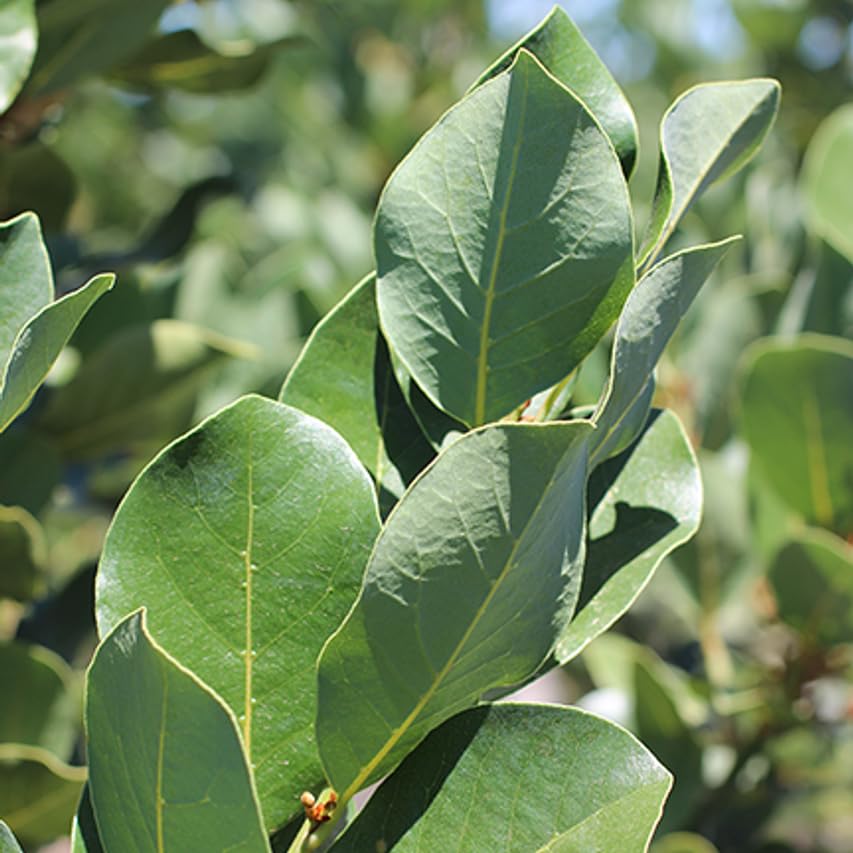
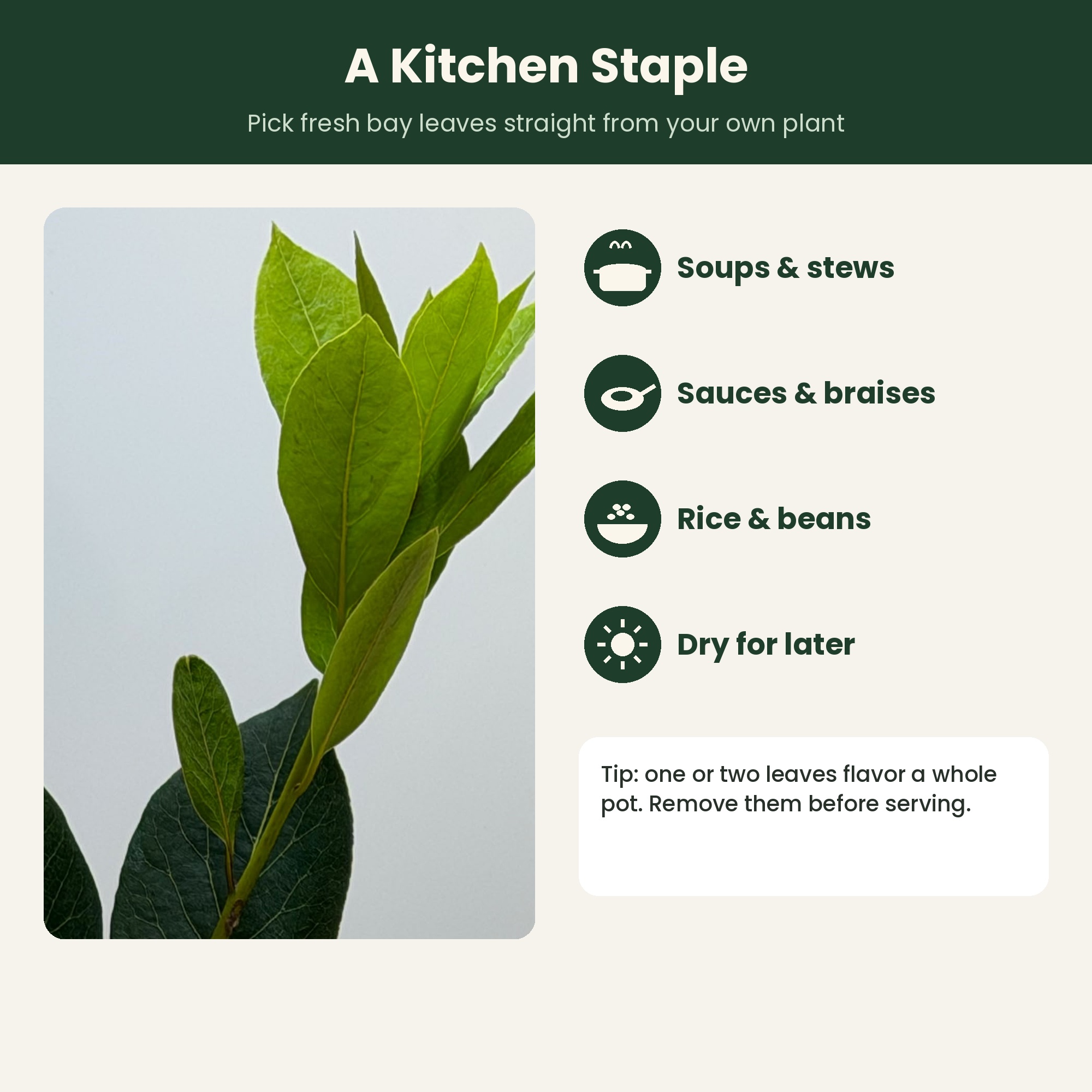
Mediterranean sweet bay (Laurus nobilis) is the classic culinary bay. Glossy evergreen leaves go into soups, stews, braises, marinades, and seafood. Among common culinary bay types, this standard form is the strongest, traditional bay flavor.
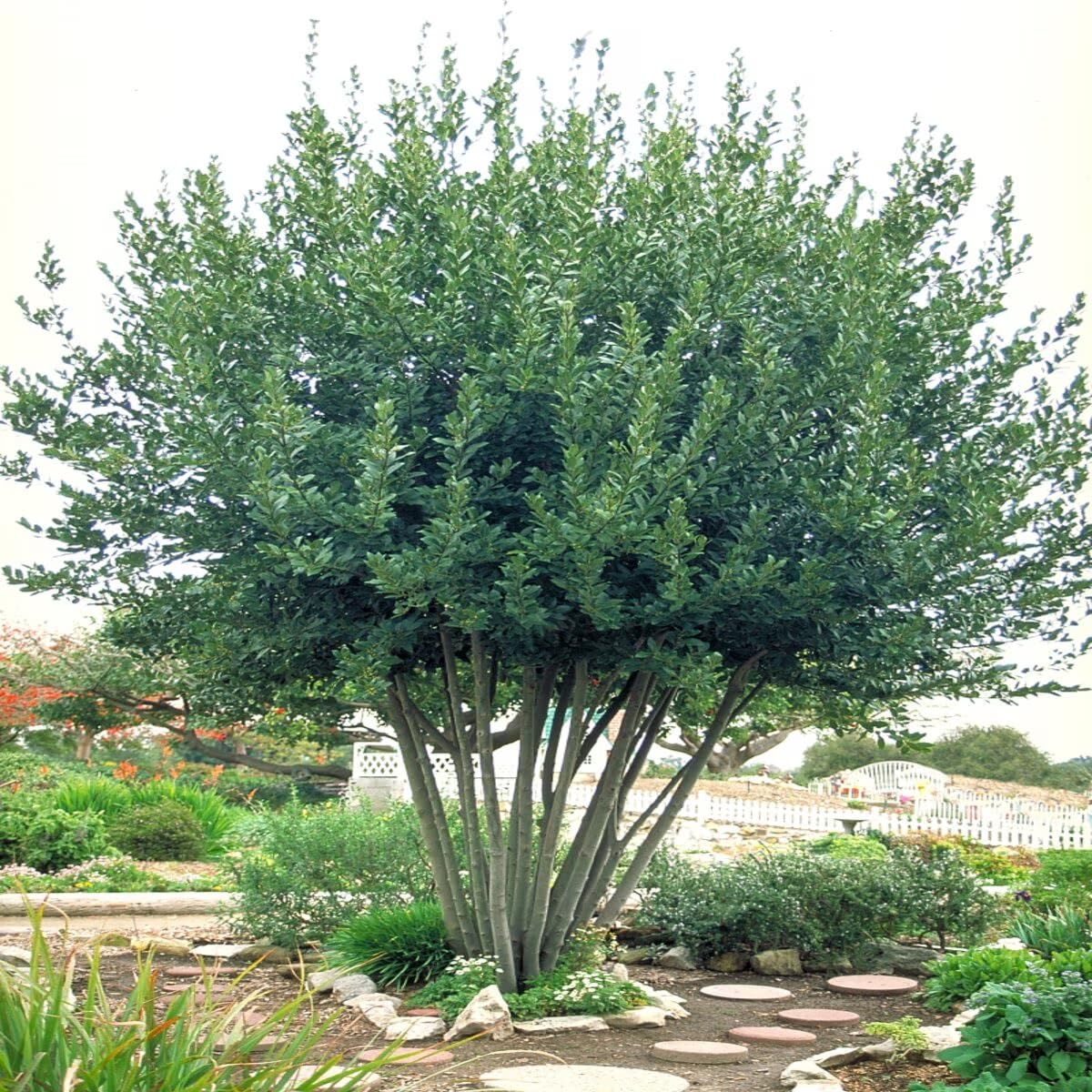
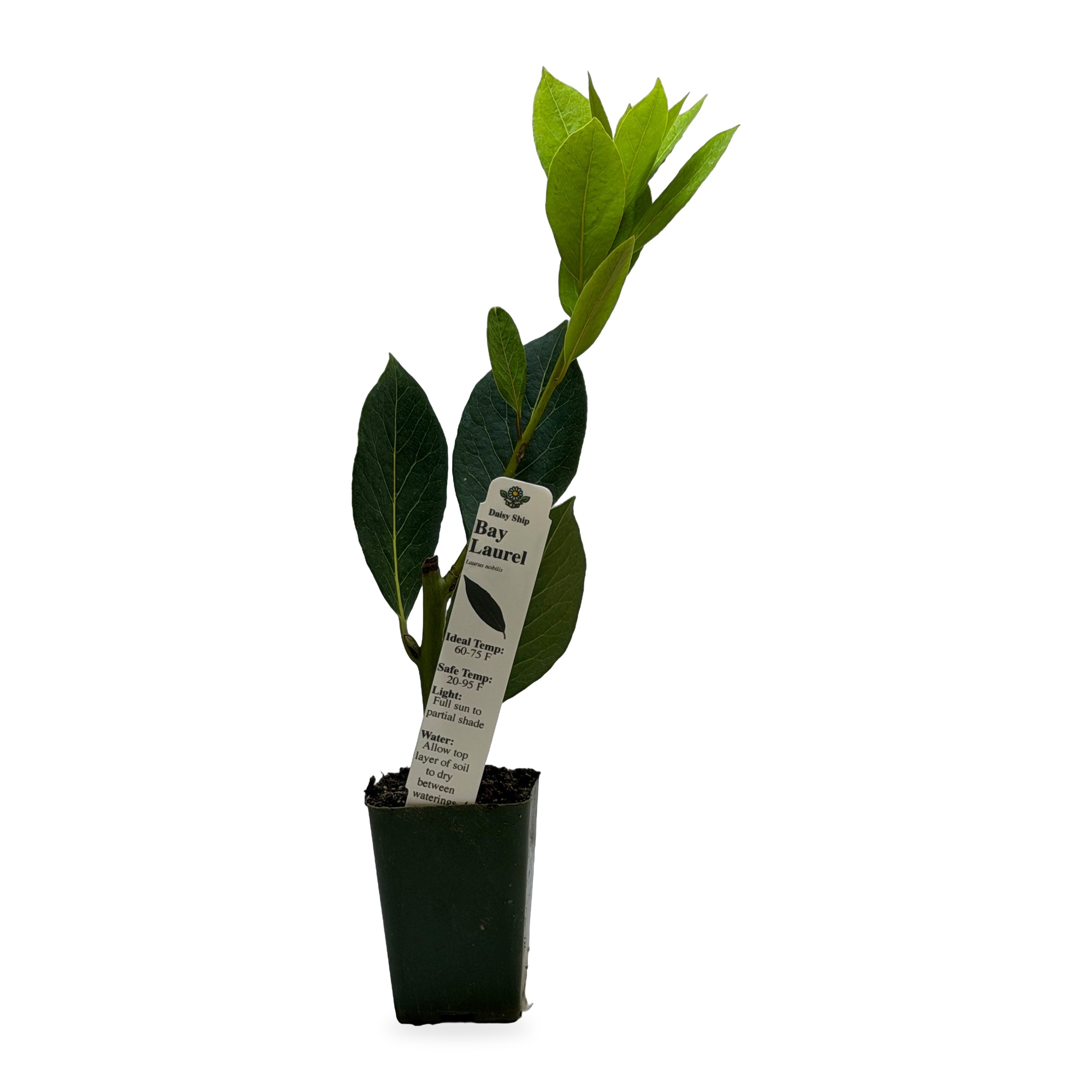
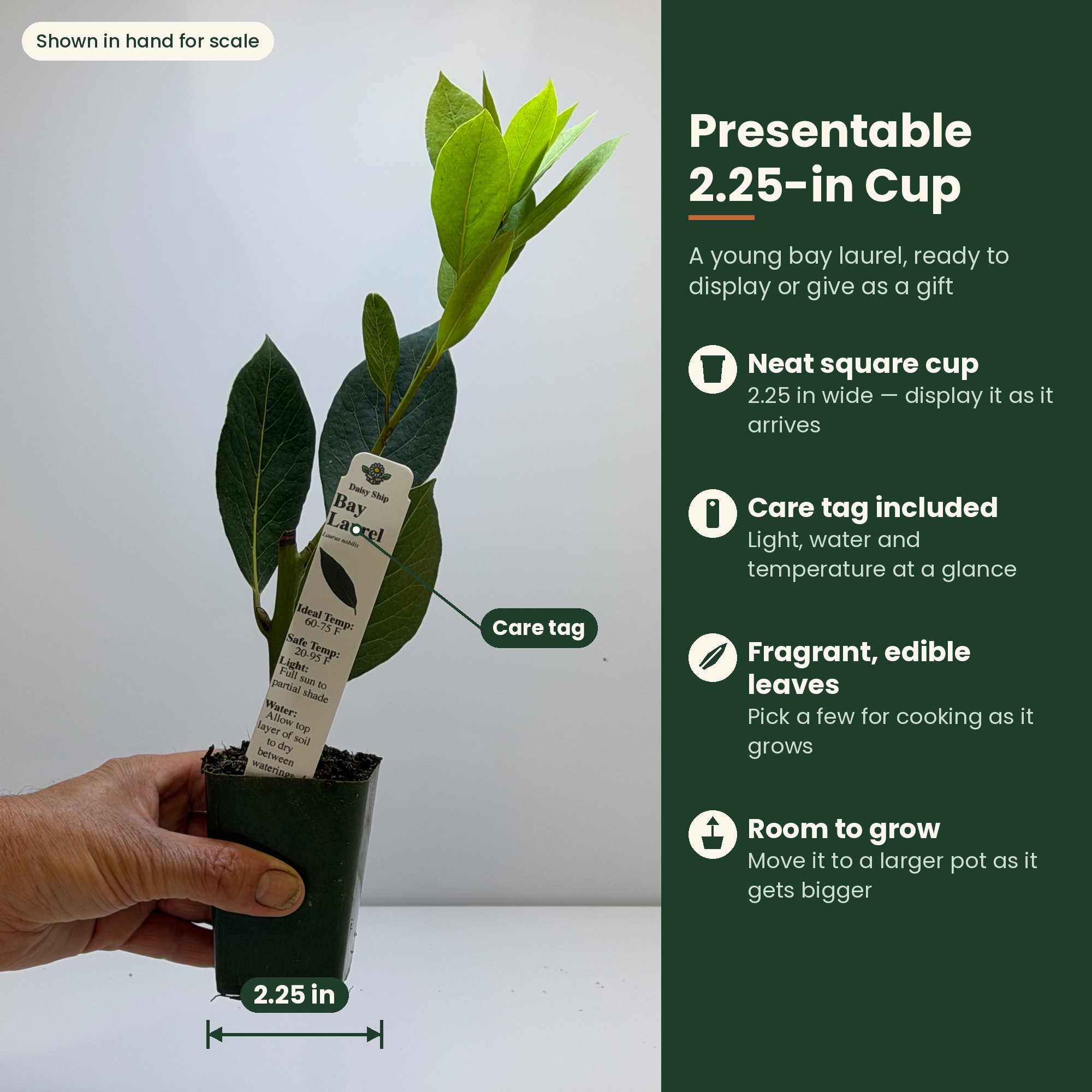
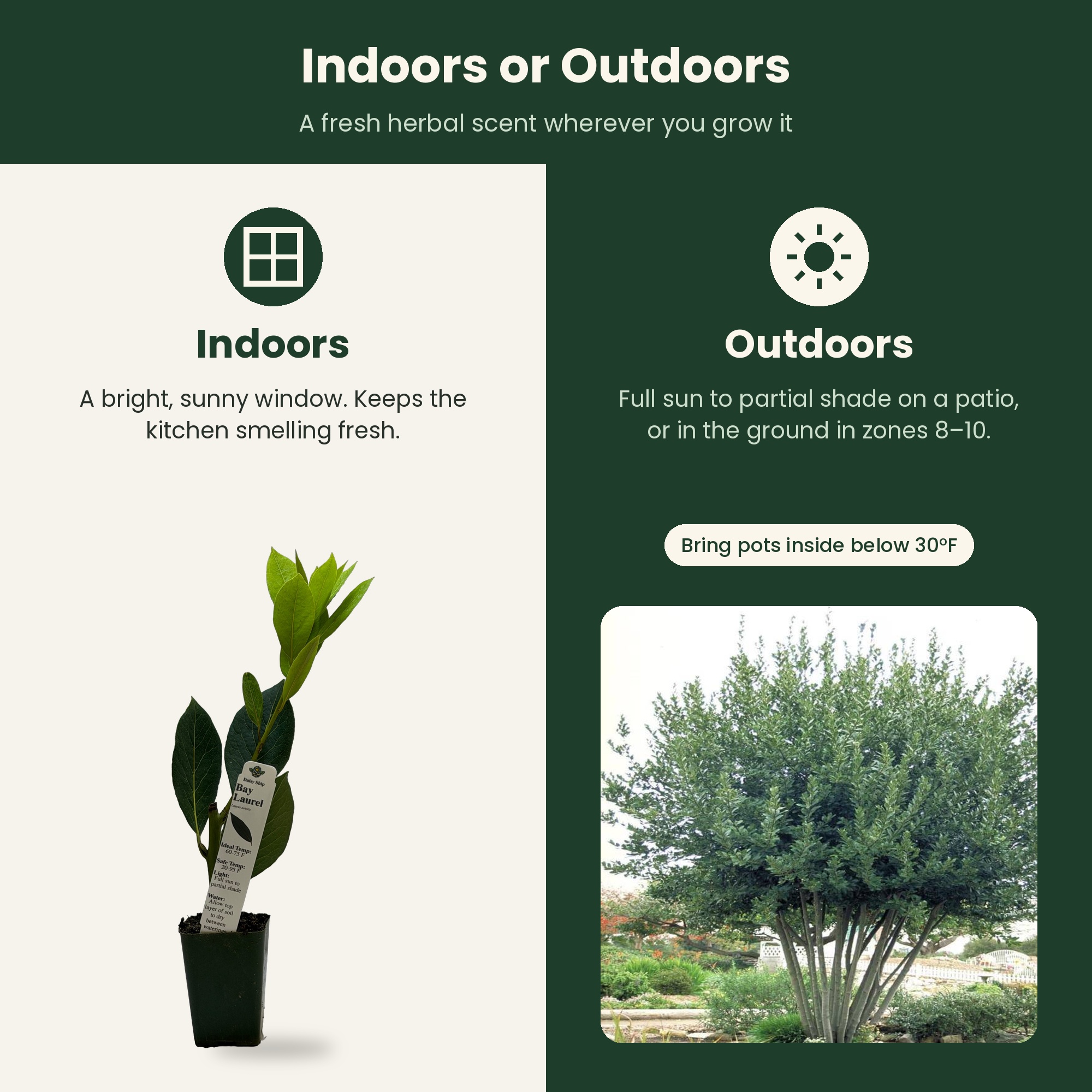
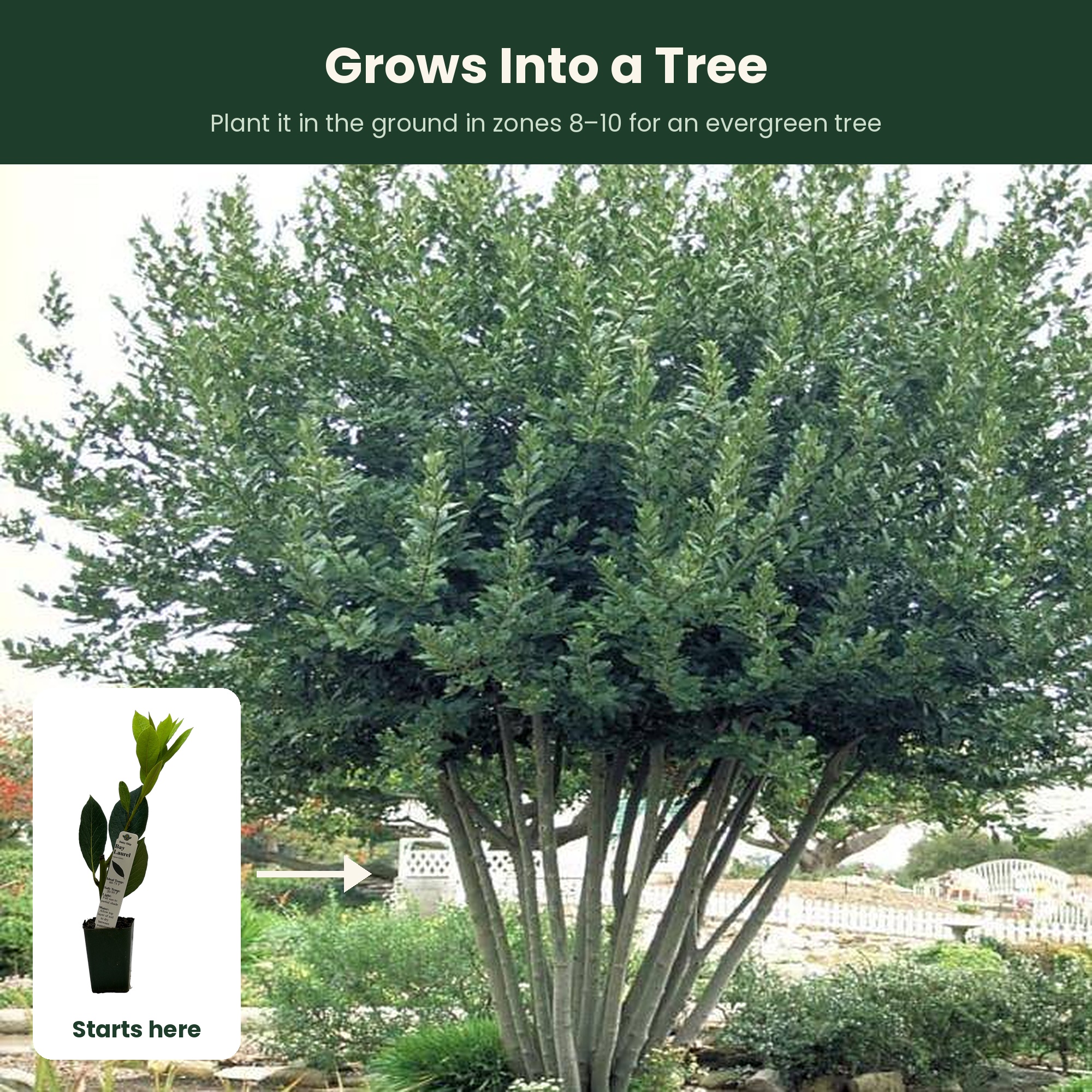
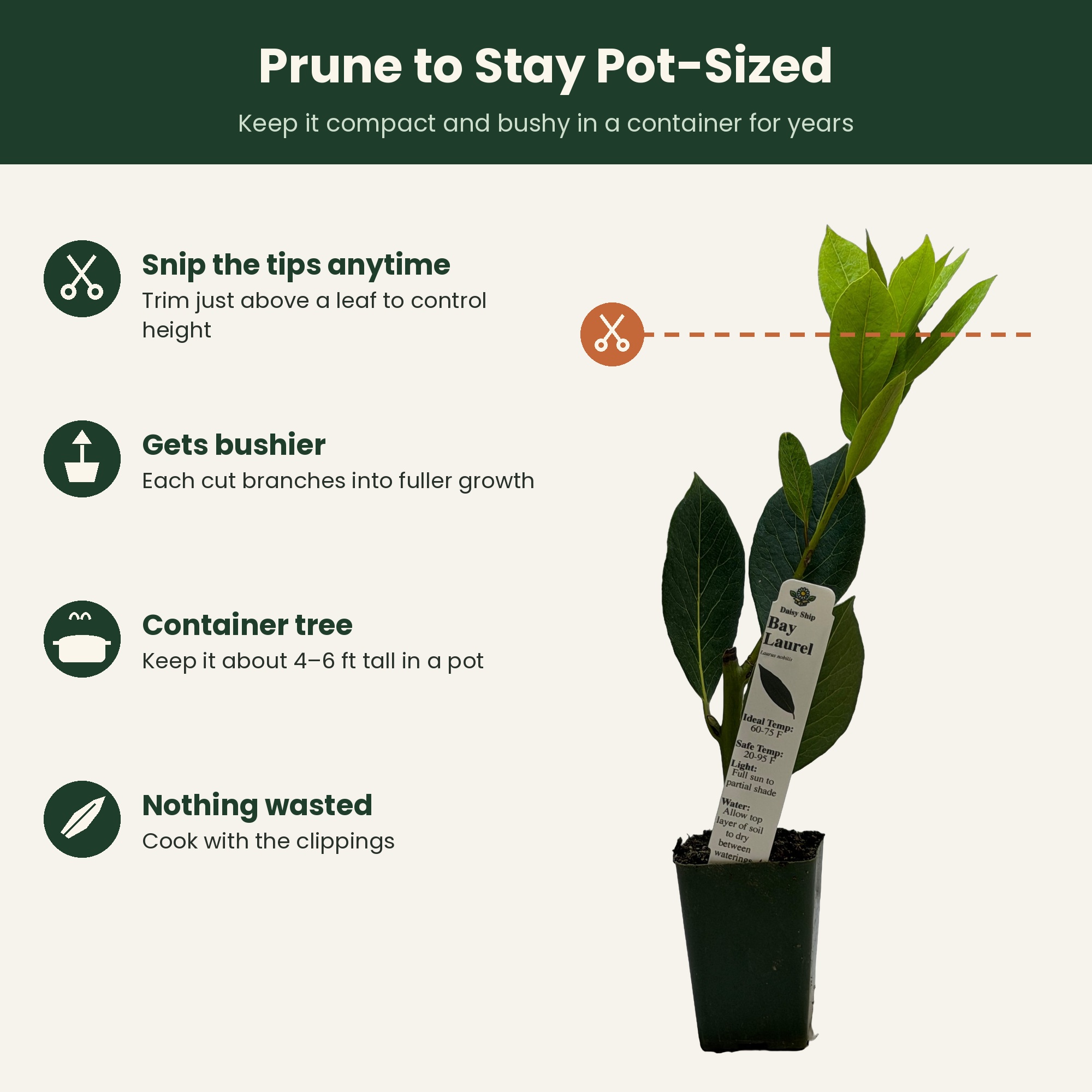
A young plant ships in a 2-inch cup, a plantable bag, a 4-inch cup, or a 5-inch self-watering planter. In a container, snip the tips to keep it about 4–6 ft and cook with the clippings. Planted in the ground without winter protection, it suits zones 8–10 and grows into an evergreen tree. Elsewhere, keep it in a pot and bring it inside below 30°F.
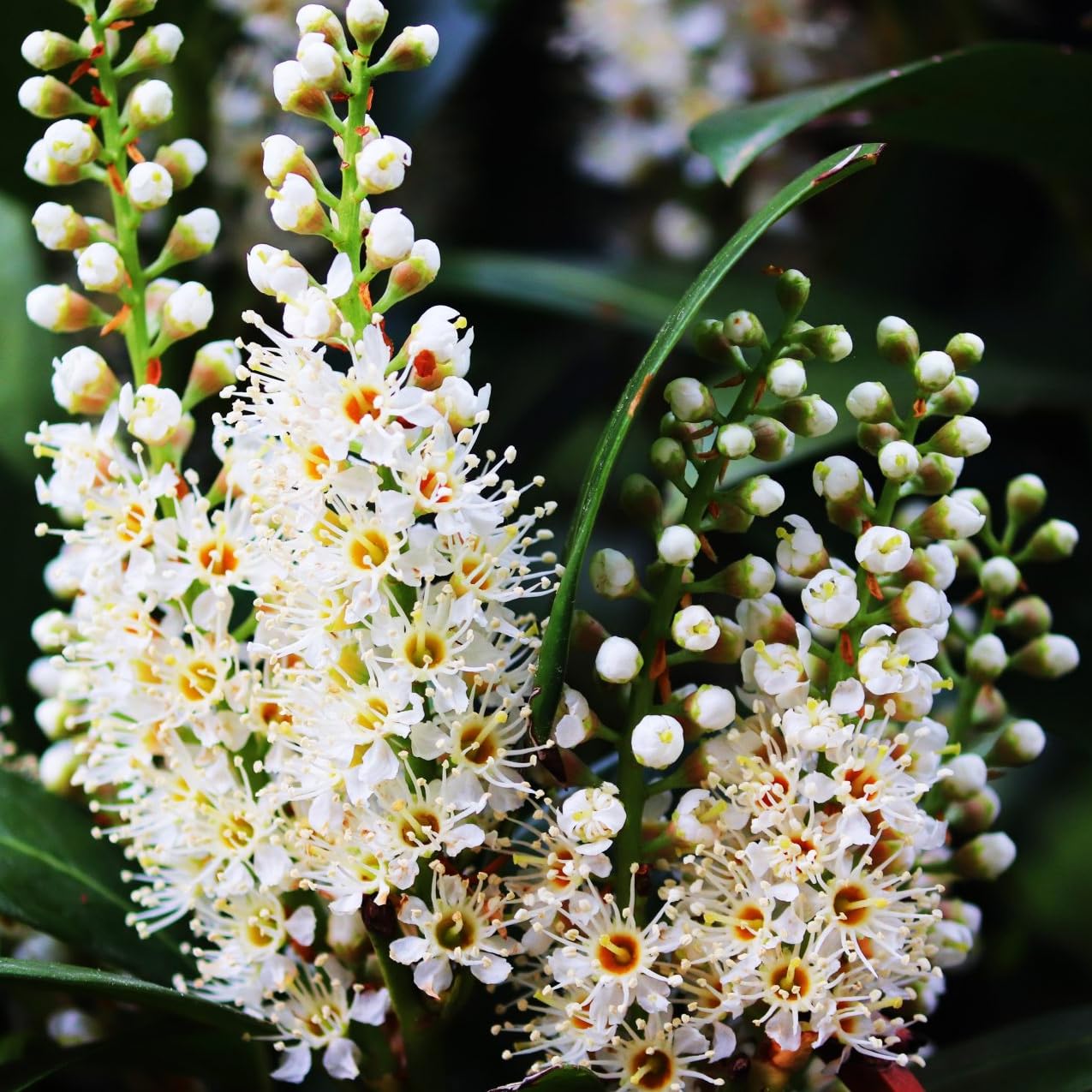
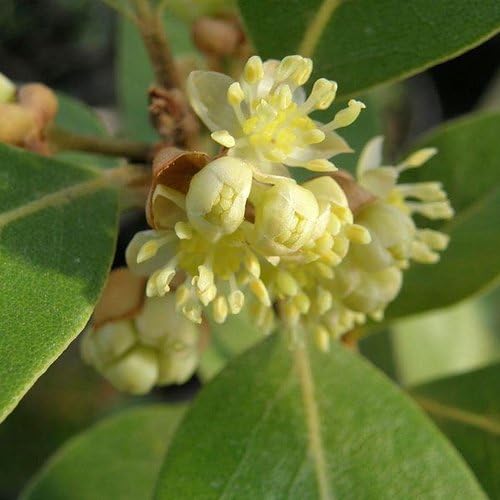
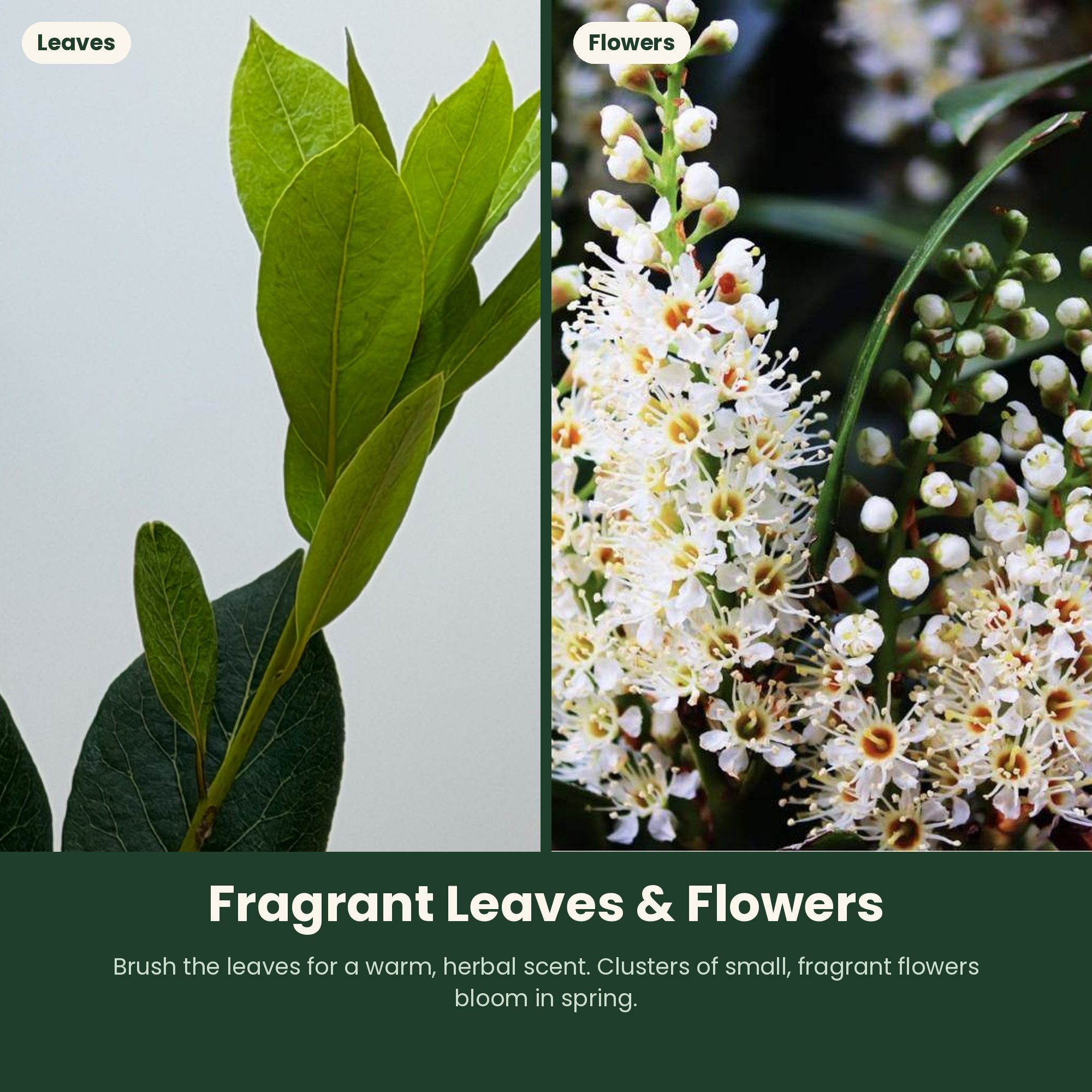
Mature plants bloom in spring with clusters of small, fragrant flowers. Brush the leaves for a warm herbal scent. One or two leaves flavor a whole pot. Dry extra leaves for later. The same species is also sold as Saratoga and Hubbard, which differ in flavor and habit.
Buy on Amazon · $18.991 x 2-in Cup · BAY-CUP-1
Care
Too hot?
Use shade cloth, or place on the east or north side of a wall.
Too cold?
Use a greenhouse, or grow indoors with LED grow lights.
Light
Full sun to partial shade, about 6 hours or more. Indoors, a bright sunny window. A grow light helps in winter.
Water
Water deeply, then let the top of the soil dry. The soil needs to drain. On the self-watering planter, refill the reservoir when it runs low.
Temperature
Ideal about 60–75°F; day 60–85°F and night 50–65°F are fine. Protect pots from a hard freeze.
Habit
Aromatic evergreen. Slow growing, and drought tolerant once established. Prune to the height you want. A container plant stays about 4–6 ft; in the ground it can reach about 60 ft.
Uses
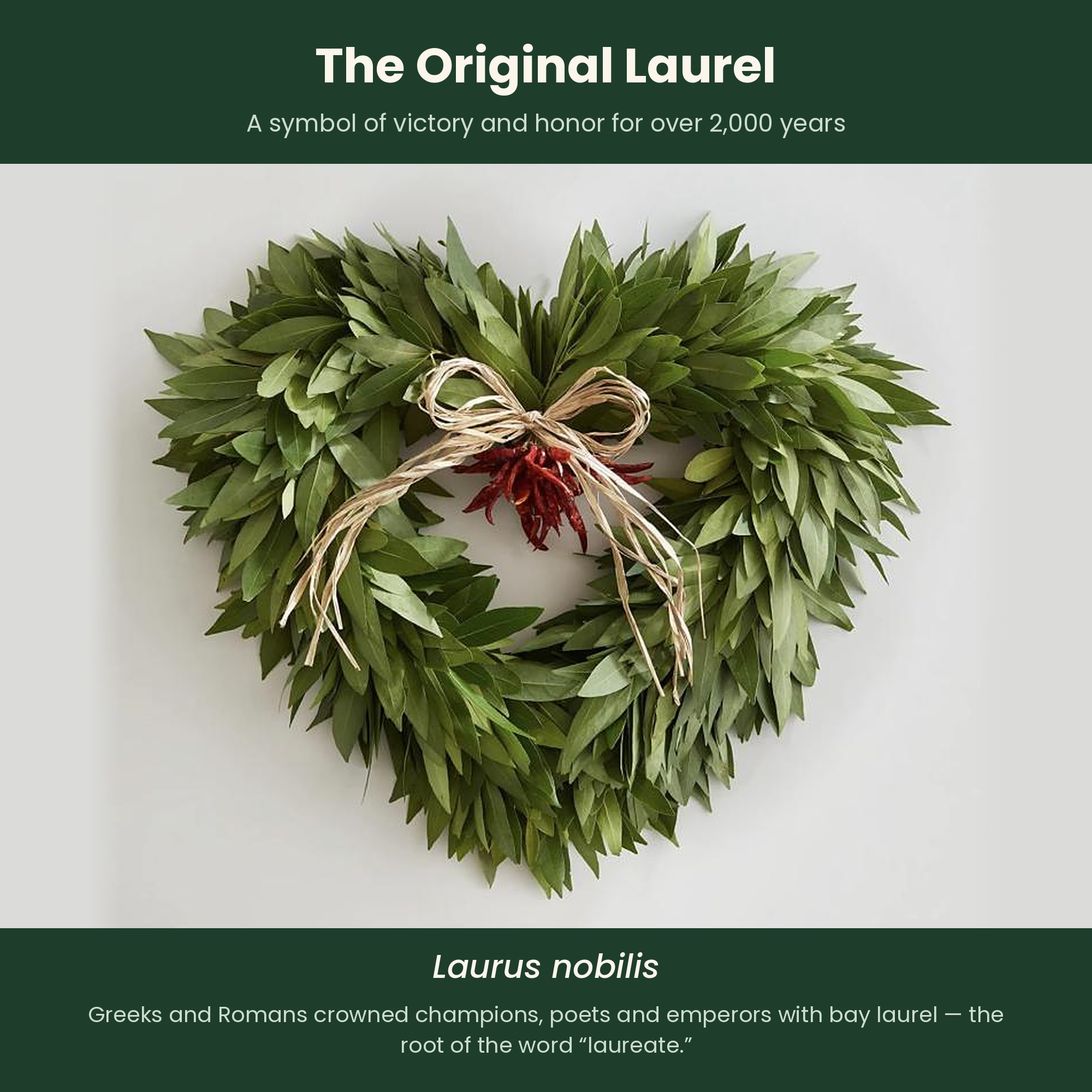
Harvest mature leaves as you need them. Simmer whole leaves in soups, stews, braises, and marinades, then take them out before serving. Fresh leaves and briefly dried leaves both carry the bay aroma. Dried leaves also work in potpourri and wreaths.
Leaves, pests, and cold
- White film on the leavesA white waxy layer is the leaf cuticle. It is normal on Mediterranean bay and is often mistaken for mildew. True mildew rarely infects bay and looks patchy or fuzzy.
- Scale insectsAn occasional pest. Scrape them off gently with a fingernail, or treat with insecticidal soap or diluted neem oil.
- ColdStandard and Hubbard plants die below about 35°F and should come indoors under 45°F. Newer standard listings say to bring pots inside below 30°F. Saratoga handles a wider range, about 15–100°F, but a hard freeze is still a reason to bring a pot plant in.
Shop on Amazon
13 open listings for this plant. A mixed pack is listed on each variety it includes. More brands can appear here over time.
1 / 8
Questions
- How much light does bay laurel need?
- Full sun to partial shade, 6 hours or more. A bright window or a grow light covers winter indoors.
- How often should I water a bay plant?
- Water deeply, then let the top layer dry. Keep the soil moist and well drained, and avoid leaving it soggy.
- Can bay laurel stay outside?
- Year-round in the ground without protection in USDA zones 8–10. Anywhere else, grow it in a pot and bring it inside below 30°F. It dies below about 35°F and should come indoors under 45°F.
- How do I keep bay small enough for the kitchen?
- Snip the tips anytime. A pruned container plant stays about 4–6 ft, and the clippings are the leaves you cook with.